Key Takeaways
- The building envelope (roof, siding, windows, flashings) and foundation are the two systems that, if neglected, create the most expensive repair bills.
- Water intrusion from envelope failures costs 10–50× more to repair than the maintenance that prevents it.
- The Fraser Valley's 1,500mm+ annual rainfall makes envelope maintenance more critical here than almost anywhere else in Canada.
- A structured annual inspection catches early-stage failures (caulk cracking, flashing lifting, gutter blockage) before they become structural damage.
- Documented maintenance records improve insurance claim outcomes and support higher property valuations at sale.
If you own investment property in the Fraser Valley, your building's envelope and foundation are doing the hardest work. They handle 1,500mm+ of annual rainfall, freeze-thaw cycles, UV exposure, wind-driven rain, and the relentless moisture pressure that makes BC construction uniquely challenging. When they fail, the cascade is expensive: water enters the wall, framing rots, mold grows, insulation loses effectiveness, and what started as a $300 caulking repair becomes a $30,000 envelope remediation.
This checklist is the annual maintenance protocol we use for investor clients across Surrey, Langley, Abbotsford, Mission, Chilliwack, and Hope. It's organized by system and season, with specific inspection points for the Fraser Valley climate.
Roofing System
Annual Inspection Points
Shingle condition: look for curling, cracking, granule loss, and lifted edges. In the Fraser Valley, moss growth on north-facing slopes is common and should be treated with zinc or copper strips. Flashing at penetrations: check all pipe boots, chimney flashings, roof vents, and skylight perimeters for cracking sealant, lifted metal, or visible gaps. Ridge and hip caps: verify secure fastening and intact sealing. Valley flashings: inspect for debris accumulation that dams water flow. Attic ventilation: verify soffit vents are unblocked and ridge vent is functional — trapped moisture in the attic accelerates sheathing rot.
When to Act
Missing or damaged shingles should be replaced immediately — a single missing shingle in Fraser Valley rain can saturate the sheathing in one storm. Flashing sealant failures require re-sealing before the next rain event. Moss treatment is best done in early spring before growth accelerates.
Pro Tip
Inspect your roof from ground level with binoculars twice per year — once in spring (after winter storms) and once in fall (before the rainy season). If you spot any anomalies, schedule a professional roof inspection before the next heavy rain.
Siding and Wall Cladding
Annual Inspection Points
Caulking at windows, doors, and penetrations: check for cracking, separation, and shrinkage. Failed caulk is the #1 water entry point in siding systems. Paint/stain condition: look for peeling, bubbling, or chalking — these indicate moisture behind the paint film. Board condition: check for warping, splitting, and rot — especially at the bottom 12 inches of siding where splash-back from rain is heaviest. Vent terminations: verify that dryer vents, bathroom exhausts, and range hood outlets are clear and properly sealed.
For detailed information on rainscreen siding systems, see our exterior guide our services.
Foundation and Below-Grade Systems
Annual Inspection Points
Grading: verify that soil slopes away from the foundation at minimum 5% for the first 6 feet (BC Building Code Section 9.14.6). Settling, landscaping changes, and root growth can alter grading over time. Foundation cracks: document and monitor any visible cracks. Hairline cracks in poured concrete are common and usually cosmetic. Cracks wider than 3mm, horizontal cracks, or cracks that show water staining require professional assessment. Window wells: check for debris accumulation, proper drainage, and intact covers. Perimeter drains: if accessible, verify outlets are flowing. For older properties (pre-1990), consider a camera inspection every 3–5 years to assess drain tile condition.
Gutter and Drainage System
Gutter cleaning: minimum twice annually — fall (post-leaf drop) and spring. Downspout routing: verify extensions discharge at least 6 feet from the foundation. Storm drain connections: confirm connections are clear and not backing up during heavy rain. Leaf guard condition: if installed, check for debris accumulation on top of guards.
For a complete gutter system guide, see our detailed article our services.
Windows and Doors
Annual Inspection Points
Weatherstripping: check for compression, cracking, and gaps that allow air infiltration. IGU condition: look for fogging between panes (indicates seal failure), condensation patterns, and visible moisture in the cavity. Hardware operation: test all locks, cranks, and sliding mechanisms — binding or resistance indicates alignment issues or hardware wear. Threshold and sill condition: check for water staining, rot, or deterioration at the bottom of door and window frames.
Deck and Balcony Systems
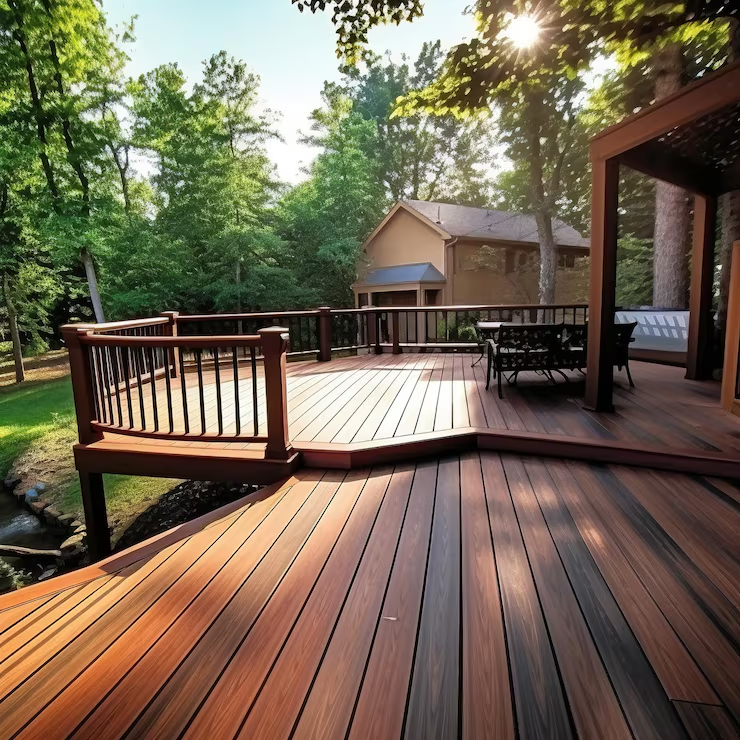
Surface condition: check vinyl membrane for lifting, punctures, or seam separation. Railing stability: test all railings for looseness — post connections are the most common failure point. Drainage: verify drains and scuppers are clear and water flows freely off the deck surface. Flashing at wall connections: check where the deck meets the building for sealant and flashing integrity.
Creating Your Annual Maintenance Calendar
Spring (March–April)
Full exterior visual inspection. Gutter cleaning and downspout verification. Grading check around foundation. Roof inspection (post-winter damage assessment). Deck surface inspection and drain clearing.
Fall (September–October)
Gutter cleaning (pre-rain season — this is the most critical timing in the Fraser Valley). Caulking inspection and re-sealing at all penetrations. Heating system inspection and filter change. Weatherstripping assessment on windows and doors. Window well cleaning and drain verification.
Ready to Protect Your Investment?
Contact Parmnoor Construction to schedule an annual property inspection for your rental portfolio. We serve investors across Surrey, Langley, Abbotsford, Mission, Chilliwack, and the entire Fraser Valley.
Frequently Asked Questions
How often should investment properties be inspected?
What's the most commonly missed maintenance item?
Can I do these inspections myself?
How much does a professional annual inspection cost?
What's the most expensive thing that goes wrong when maintenance is skipped?
Sources (Official Links)
Related Reading
Proactive vs. Reactive: How Annual Maintenance Contracts Save Investors Thousands
2026-03-06INVESTORSWhy Code-Compliant Maintenance Is an Investor's Best Defense Against Liability
2026-03-05MAINTENANCEGutters in the Fraser Valley: Sizing, Leaf Guards, and Downspout Routing for Heavy Rain Seasons
2026-02-24Our Referral Program
Homeowner Discount
Referred by a Realtor, Property Manager, or someone you trust? Mention your referral to unlock an exclusive discount on your project—no codes, no fine print.
Partner Commissions
Are you a professional? Earn transparent, documented commissions on every referred project with 24-hour quotes and priority scheduling.