Key Takeaways
- Low‑E coatings reduce radiant heat transfer by up to 70%—the single biggest performance upgrade in modern windows.
- Triple-pane IGUs achieve U-values of 0.19–0.22 W/m²K vs 0.27–0.33 for double-pane, delivering measurably warmer interior glass surfaces.
- Installation quality (air sealing, flashing, shimming) determines 50%+ of real-world window performance—the best glass in a leaky opening still fails.
- BC Energy Step Code Step 3+ projects may require triple-pane or equivalent performance—check your municipality's current adoption level.
- Noise reduction improves most dramatically when upgrading from single-pane to double-pane (STC 26→31); triple-pane with laminated glass can reach STC 35–38.
Old or poorly installed windows are one of the biggest comfort and energy problems in Fraser Valley homes. If you're living with cold drafts near windows, condensation or mold forming at sills, uncomfortable "cold zones" in rooms beside glass, or heating bills that spike every November—your windows are likely underperforming. In BC, the best window upgrade is not just "better glass." It's a high-performance insulated glass unit (IGU) installed into a properly sealed, flashed, and insulated rough opening.
At Parmnoor Construction, we approach window replacement as an envelope upgrade—not just a product swap. We serve homeowners across Surrey, Abbotsford, Langley, Mission, Chilliwack, and Hope with window and door installations built for BC's wet, variable climate.
How Energy-Efficient Windows Work
Modern energy-efficient windows improve performance through four integrated technologies:
Low‑E Coatings
Low-emissivity (Low‑E) coatings are microscopically thin metallic layers applied to the glass surface. They reflect infrared radiation (heat) back into the home during winter while allowing visible light to pass through. A standard Low‑E coating reduces radiant heat transfer through the glass by up to 70% compared to uncoated glass. Most double and triple-pane windows use "soft coat" Low‑E (sputtered in a vacuum chamber), which offers better performance than the older "hard coat" (pyrolytic) process.
Gas Fills
The space between panes is filled with argon or krypton gas instead of air. Argon is the standard choice—it's 34% denser than air, which reduces convective heat transfer within the IGU cavity. Krypton is denser still and performs better in narrower cavities (important for triple-pane units where total thickness matters), but costs significantly more. For most Fraser Valley homes, argon-filled units deliver the best performance-to-cost ratio.
Warm-Edge Spacers
The spacer bar that separates the panes at the edge of the IGU is a critical thermal bridge. Older aluminum spacers conduct heat rapidly, creating a cold edge zone where condensation forms. Modern "warm-edge" spacers (stainless steel, foam, or composite materials) reduce edge-of-glass heat loss by 10–15% and significantly reduce condensation at the glass perimeter—a major comfort improvement in Fraser Valley homes where winter humidity levels are high.
Frame Materials
Vinyl (PVC) frames dominate the Fraser Valley market—they're thermally efficient, low-maintenance, and cost-effective. For premium installations, fiberglass frames (like Fibertec or Inline) offer superior structural rigidity, lower thermal expansion, and longer lifespan. Wood frames provide the best insulation value but require ongoing exterior maintenance in BC's wet climate. Aluminum frames are rarely recommended for residential use due to poor thermal performance.
Pro Tip
When comparing window quotes in Surrey or Langley, look at the whole-unit U-value—not just the centre-of-glass value. The whole-unit number includes frame and edge losses, which can be 30–50% higher than the centre-of-glass spec. A window with U-0.22 centre-of-glass might have U-0.30 whole-unit—and it's the whole-unit number that determines real comfort and energy performance.
Double-Pane vs Triple-Pane: The Real Comparison
Double-Pane (Two Panes + One Gas Cavity)
Typical whole-unit U-value: 0.27–0.33 W/m²K (with Low‑E and argon). Interior glass surface temperature on a -10°C night: approximately 12–14°C. Sound Transmission Class (STC): 28–31. Weight: lighter, easier on existing framing and hardware. Cost: baseline—this is the standard for most Fraser Valley replacement projects.
Triple-Pane (Three Panes + Two Gas Cavities)
Typical whole-unit U-value: 0.19–0.22 W/m²K (with dual Low‑E and argon). Interior glass surface temperature on a -10°C night: approximately 16–18°C—noticeably warmer to sit near. STC: 32–35 (up to 38 with laminated glass options). Weight: 30–50% heavier than double-pane—framing and hardware must accommodate this. Cost: typically 15–30% more than equivalent double-pane units.
When Triple-Pane Makes Sense
North-facing windows that receive no solar heat gain. Bedrooms near busy roads (Highway 1 corridor through Langley and Abbotsford, Highway 11 in Mission). Homes pursuing BC Energy Step Code Step 3 or higher compliance. Large picture windows or patio doors where the glass area dominates the wall. Homeowners who prioritize long-term energy savings and comfort over initial cost.
When Double-Pane Is the Right Choice
Budget-conscious renovations where the existing windows are single-pane or failed sealed units—the jump to modern double-pane delivers the biggest comfort gain per dollar. South and west-facing windows that benefit from solar heat gain (triple-pane slightly reduces passive solar benefit). Projects where existing framing can't support the additional weight of triple-pane units without modification.
Pro Tip
If you're replacing windows in a home along the Highway 1 corridor through Langley, Abbotsford, or Chilliwack, prioritize triple-pane (or double-pane with laminated glass) on the road-facing elevation. The noise reduction alone justifies the upgrade—residents consistently report it as the single most noticeable improvement in their home.
Draft Control: Why the Rough Opening Matters More Than the Glass
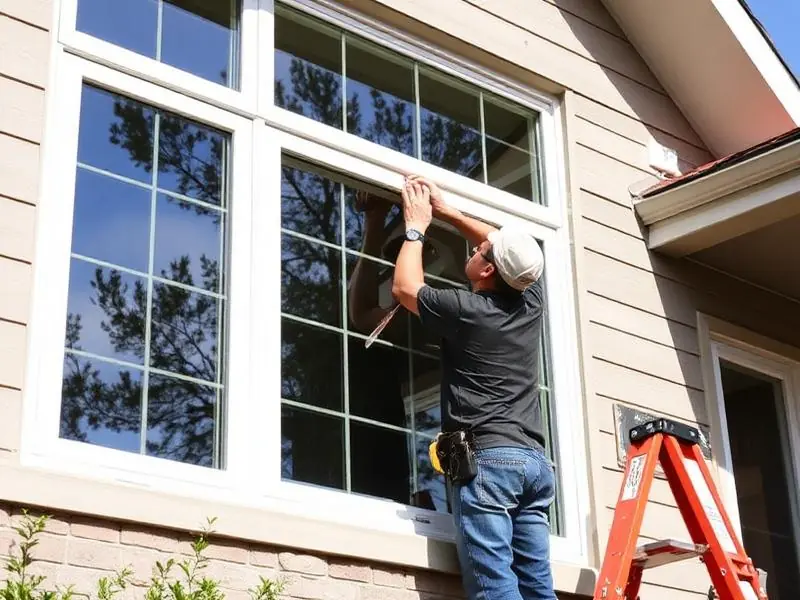
Even the best triple-pane window performs poorly if the rough opening—the framed hole in the wall where the window sits—is not properly sealed, insulated, and flashed. This is where installation quality separates a comfortable home from a drafty one.
Professional Installation Details
Waterproof flashing: self-adhered membrane flashing at the sill (sloped to drain outward), jamb flashing integrated with the water-resistive barrier (WRB), and head flashing that shingles over the WRB above. Shimming: the window must be shimmed plumb, level, and square within the rough opening. Gaps between the window frame and rough opening are typically ½"–¾" on each side. Insulation: low-expansion spray foam (not high-expansion, which can bow frames and crack glass) fills the gap between the window frame and the rough opening. Interior air sealing: a continuous bead of acoustical sealant or vapor-barrier tape at the interior face of the window-to-wall junction prevents warm, humid interior air from reaching the cold zone behind the trim—where it would condense and cause mold.
Common Installation Failures We See in Fraser Valley Homes
Missing sill pan flashing—water enters the wall below the window and rots the framing. We see this constantly in 1990s-era homes across Surrey and Langley. High-expansion foam bowing the frame—the window won't operate smoothly and the seal between sash and frame is compromised. No interior air seal—drafts bypass the window entirely through the gap behind the interior trim. Improper integration with rainscreen/WRB system—the window flashing doesn't connect to the wall's moisture management system.
BC Energy Step Code: What It Means for Your Windows
BC's Energy Step Code is a provincial framework that sets increasing levels of energy performance for new construction. While the Step Code primarily applies to new buildings and major renovations requiring building permits, it's increasingly influencing the window products available in the Fraser Valley market.
Current Step Code Window Implications
Step 1 (current BC Building Code minimum): standard double-pane Low‑E meets requirements. Step 2: improved double-pane (better spacers, higher-performance Low‑E) typically sufficient. Step 3: triple-pane or very high-performance double-pane often required to meet whole-building energy targets. Step 4–5 (Passive House-adjacent): triple-pane with certified performance data, installed with meticulous air sealing, is standard.
Municipality adoption varies across the Fraser Valley—Surrey, Langley, and Abbotsford are at different stages of Step Code implementation. We stay current with local requirements and can advise which performance level your project needs.
Pro Tip
Even if your renovation doesn't trigger Step Code compliance, installing windows that meet Step 2–3 performance levels is a smart investment. Energy costs in BC are rising, and higher-performance windows improve both comfort and resale value. The incremental cost between Step 1 and Step 3 windows is often only 10–20% of the total installed price.
Noise Reduction: What Actually Improves Sound Comfort
Sound reduction through windows is measured in Sound Transmission Class (STC). Higher STC means less noise passes through.
What Affects STC Rating
Number of panes: each additional pane adds 2–4 STC points. Glass thickness variation: using different thicknesses in each pane (e.g., 4mm + 6mm) disrupts sound transmission across a wider frequency range. Laminated glass: a PVB (polyvinyl butyral) interlayer between glass sheets significantly dampens sound—especially effective for low-frequency traffic noise. Air sealing: gaps around the window frame bypass the glass entirely—even a 1mm gap can reduce effective STC by 5–10 points.
Practical Noise Reduction Recommendations
For homes near major roads: triple-pane with one laminated lite, or double-pane with laminated glass on both panes. For homes near airports (Abbotsford International): consult acoustic requirements—some flight path zones have specific noise mitigation standards. For general suburban quiet: standard double-pane Low‑E with proper air sealing provides adequate noise reduction for most Fraser Valley neighbourhoods.
Want Quieter, Warmer Rooms?
Contact Parmnoor Construction for window and door replacement across the Fraser Valley—from Surrey to Hope. We'll assess your current windows, recommend the right performance level, and install with the air sealing and flashing details that make the investment worthwhile.
Frequently Asked Questions
Is triple-pane always worth the extra cost?
What causes condensation on the inside of windows?
Can you replace windows in winter?
Do you replace entry doors and patio doors too?
How long does a window replacement project take?
Will new windows reduce my heating bill?
Sources (Official Links)
Related Reading
Rainscreen Siding & Structural Framing in the Fraser Valley: Build a Leak-Resistant Home Envelope
2025-10-14REGULATIONSHow to Legalize a Basement Suite in the Fraser Valley: BC Code Checklist for Egress, Fire, Sound, and Permits
2025-11-03MAINTENANCEGutters in the Fraser Valley: Sizing, Leaf Guards, and Downspout Routing for Heavy Rain Seasons
2026-02-24Our Referral Program
Homeowner Discount
Referred by a Realtor, Property Manager, or someone you trust? Mention your referral to unlock an exclusive discount on your project—no codes, no fine print.
Partner Commissions
Are you a professional? Earn transparent, documented commissions on every referred project with 24-hour quotes and priority scheduling.