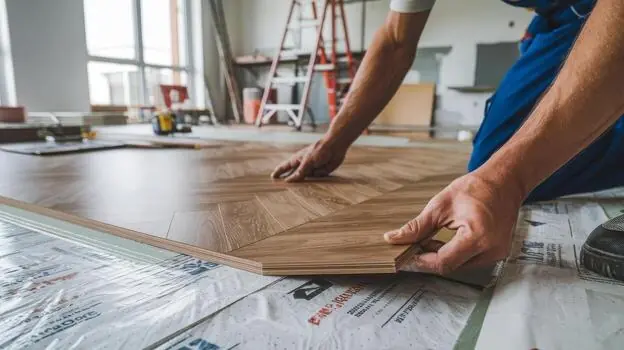
Key Takeaways
- LVP with a rigid SPC core (5mm+) is the safest choice for basements, kitchens, and rental suites across the Fraser Valley.
- Engineered hardwood with a 3mm+ wear layer offers long-term refinishing potential—ideal for main floors above grade.
- Subfloor flatness (3/16" tolerance over 10 feet) is the #1 predictor of click-lock flooring success or failure.
- Sound underlayment (IIC-rated) is a code requirement in secondary suites—not just a comfort upgrade.
- Moisture testing with a calcium chloride kit or relative humidity probe should happen before any flooring goes down in Fraser Valley basements.
Flooring is one of the most visible upgrades in a renovation—and one of the easiest places to make a costly mistake. In the Fraser Valley, the flooring decision is shaped by seasonal humidity swings (30% RH in winter heating season to 70%+ in summer), basement moisture risk from high water tables in Abbotsford and Chilliwack, busy households with kids, pets, and rental tenants, and how flat (or not) your subfloor really is.
At Parmnoor Construction, we don't just "install planks." We build flooring systems that feel solid, stay quiet, and don't buckle when the season changes. We serve homeowners across Surrey, Abbotsford, Langley, Mission, Chilliwack, and Hope.
LVP: The Practical Champion for BC Households
Luxury Vinyl Plank (LVP) has become the dominant flooring choice in Fraser Valley renovations—and for good reason. Modern LVP handles everyday spills, dog claws, kid chaos, and moisture exposure better than any wood-based floor at a comparable price point.
What to Look For in LVP
Not all LVP is created equal. The key specifications that separate a durable floor from a disappointing one include:
Core type: SPC (Stone Polymer Composite) cores are rigid, dimensionally stable, and resist temperature-driven expansion. WPC (Wood Polymer Composite) cores are softer underfoot but slightly more prone to denting from heavy furniture. For most Fraser Valley homes, SPC is the better choice. Total thickness: look for 5mm minimum (6mm–7mm preferred) for residential stability. Some budget products at 3mm–4mm feel hollow and flex over minor subfloor imperfections. Wear layer: 20 mil (0.5mm) is the minimum for residential use. For rentals, pet-heavy households, and high-traffic areas, 28 mil (0.7mm) provides significantly better scratch and scuff resistance. Attached underlayment: many LVP products include a pre-attached cork or IXPE pad. If yours doesn't, add a compatible underlayment—never use carpet underpad beneath LVP.
Pro Tip
When shopping for LVP at flooring stores in Surrey or Langley, ignore the marketing names ("luxury," "premium," "ultra") and check three numbers: total thickness, wear layer thickness, and core type. These specs determine real-world performance—the photo-printed design layer is the same technology across all price points.
Engineered Hardwood: Premium Feel With Climate Stability
Engineered hardwood gives you the warmth, grain variation, and tactile quality of real wood with better dimensional stability than solid hardwood. The multi-layer construction—a hardwood veneer bonded to a plywood or HDF substrate—resists the cupping and gapping that solid hardwood experiences in BC's humidity swings.
Where Engineered Hardwood Excels
Main floors and upper floors in homes across Surrey, Langley, and Abbotsford. Open-concept living areas where a continuous wood floor creates visual flow. Homeowners who want long-term refinishing potential—a 3mm+ wear layer can be sanded and refinished 2–3 times over the life of the floor.
Where to Be Cautious
Below-grade installations (basements) carry more risk, even with engineered products. If the concrete slab has elevated moisture levels—common in older homes across Mission, Chilliwack, and Hope—even engineered hardwood can cup or delaminate over time. We always test before recommending wood-based products below grade.
Installation Methods
Floating (click-lock): fastest, most forgiving of minor subfloor irregularities, and allows the floor to expand/contract as a unit. Glue-down: best for radiant heat applications and large open spaces where a floating floor might feel "bouncy." Nail-down: only for wood subfloors (not concrete), and provides the most solid feel underfoot.
The Subfloor Truth: Flat Beats "Good Enough"
This is where most flooring failures originate—not in the product, but in what's underneath it. Click-lock flooring (both LVP and engineered hardwood) needs a flat surface. The industry standard tolerance is 3/16" (4.76mm) variation over 10 feet.
What Happens When You Install Over Waves
Joints separate over time as the floor flexes at high and low spots. Hollow sounds appear when you walk—the floor "drums" over voids. Click edges break under repeated stress, creating visible gaps. Premature wear appears at high spots where foot traffic concentrates pressure.
Our Subfloor Preparation Process
Every flooring project at Parmnoor Construction starts with a thorough subfloor assessment:
We check flatness with a 10-foot straightedge across multiple directions. We identify high spots (which can be ground down) and low spots (which need patching or self-leveling compound). We test moisture levels—especially on concrete slabs. For plywood subfloors, we check for delamination, squeaks, and adequate fastening. We verify joist spacing and condition in older homes where subfloor bounce may indicate structural concerns.
Pro Tip
Self-leveling compound is one of the most misunderstood products in flooring prep. It's not "self-" anything—it requires correct primer, mixing ratios, pour technique, and temperature control. In Fraser Valley homes with radiant heat or high-moisture basements, using the wrong leveler can cause adhesion failure months later. This is one area where professional application pays for itself.
Sound Control: Why Underlayment Matters More Than You Think
In multi-level homes and especially in secondary suites (which are subject to BC Building Code Section 9.11 sound transmission requirements), the underlayment beneath your flooring plays a critical role in impact sound isolation (IIC rating).
Underlayment Selection Guide
Cork underlayment (3mm): excellent impact sound reduction, natural moisture resistance, and comfortable underfoot. Best for engineered hardwood on upper floors. IXPE foam (1.5mm–2mm): standard for SPC-core LVP, provides basic sound dampening and a vapor barrier in one layer. Rubber underlayment (3mm–5mm): premium impact sound isolation, ideal for condos and suites where IIC performance must be documented. Combination products: some underlayments integrate vapor barrier, sound dampening, and thermal insulation—useful for basement installations in Abbotsford and Chilliwack where all three properties matter.
Basement Flooring: Build for Moisture First
Fraser Valley basements—especially in flood-prone areas of Abbotsford, Chilliwack, and Mission—require a moisture-first approach to flooring:
Pre-Installation Moisture Testing
Before any flooring goes down on a concrete slab, we test moisture levels using one of two methods: Calcium chloride test (ASTM F1869): measures moisture vapor emission rate (MVER) from the slab surface. Most flooring manufacturers require MVER below 3–5 lbs/1,000 sq ft/24 hours. Relative humidity probe (ASTM F2170): measures moisture conditions within the slab itself. Most manufacturers require readings below 75–80% RH at 40% depth.
Basement-Specific Product Selection
SPC-core LVP is the default recommendation for Fraser Valley basements—it's dimensionally stable, waterproof at the core, and handles the temperature variations common in below-grade spaces. If the homeowner prefers a wood look with more warmth, we recommend engineered hardwood only when moisture testing confirms safe levels and a quality vapor barrier is installed.
Cold-Foot Comfort
Basement floors feel cold because concrete conducts heat away from your feet. Solutions include cork or rubber underlayment (adds thermal break), in-floor radiant heat (electric mat systems work well under LVP and tile), and area rugs in primary seating zones—sometimes the simplest solution is the best.
Pro Tip
If your basement has had any history of water intrusion—even "just a little dampness in heavy rain"—address the water source before investing in new flooring. We often coordinate with our drainage team to resolve foundation moisture issues before the flooring crew arrives. A beautiful new floor over a wet slab is a ticking clock.
Tile: The Right Choice in the Right Rooms
Porcelain and ceramic tile remain the best option for bathrooms, laundry rooms, and entryways where standing water is common. Key considerations for Fraser Valley installations include waterproofing membrane beneath tile in wet areas (Schluter DITRA or equivalent), slip resistance rating (DCOF 0.42+ for wet areas), large-format tiles (24×48") that reduce grout lines and maintenance, and heated floor mats for comfort in bathrooms—especially popular in homes across Surrey and Langley.
Flooring and Resale Value in the Fraser Valley
In the competitive Fraser Valley real estate market, flooring condition strongly influences buyer perception. The upgrades that deliver the best return include continuous LVP or engineered hardwood through main living areas (eliminating carpet-to-tile transitions), consistent color and style across open-concept spaces, and professional installation with clean transitions at doorways and stairs.
Want Flooring That Feels Solid for Years?
Contact Parmnoor Construction for a flooring assessment and quote. We serve the entire Fraser Valley from Surrey to Hope.
Frequently Asked Questions
Is LVP "cheap looking"?
Can you put engineered hardwood in a basement?
What about tile vs LVP in kitchens?
Do you remove and dispose of old flooring?
How do I keep floors quiet in a two-storey home?
How long does a flooring installation take?
Sources (Official Links)
Related Reading
How to Legalize a Basement Suite in the Fraser Valley: BC Code Checklist for Egress, Fire, Sound, and Permits
2025-11-03PAINTINGInterior & Exterior Painting in the Lower Mainland: Prep Standards, Low‑VOC Options, and Weatherproof Finishes
2026-01-08TRENDSTop Bathroom Renovation Trends for 2026 in the Lower Mainland: Wet Rooms, Better Lighting, and Durable Finishes
2026-03-01Our Referral Program
Homeowner Discount
Referred by a Realtor, Property Manager, or someone you trust? Mention your referral to unlock an exclusive discount on your project—no codes, no fine print.
Partner Commissions
Are you a professional? Earn transparent, documented commissions on every referred project with 24-hour quotes and priority scheduling.